|

The VMPA&O is the heart of all we do at TBS, and in order to ensure that we are able to fulfil our mission we have a behaviour policy in place.
Good behaviour doesn’t always just happen, and as such we have to ensure that the children are guided in this skill of making positive choices that will be essential throughout their lives.
Our Positive Behaviour Policy focuses on “The 4 Rs Framework”, which is set out below.
- Rights – a reasonable expectation of what should be
- Responsibilities – Rights can only be enjoyed if people act responsibly
- Rules – These protect rights and remind of responsibilities
- Routines – a set of actions that are regularly followed as part of a procedure that encourages responsible behaviour.
The 4Rs are a powerful agenda-setting framework, which makes it easier for pupils to see fairness and logic in the behaviour management approaches of adults. It also allows the adults to correct behaviour from the perspective of protecting rights rather than criticising the pupil person ally.
In order to use the 4Rs Framework, we need to actively teach the pupils the connection between the parts. Enjoying the right to feel safe, for example, needs to be coupled with the responsibility to behave in a way that lets other pupils feel safe.
The children are reminded of the 4Rs on a regular basis, the rights, responsibilities and rules can all be found in the pupil agenda. We have based our rules on a set of 6 basic rules “The Golden Rules” that encompass most situations encountered in school. These 6 rules have been modified for use in the playground and dining room by the pupils. All rules are clearly displayed around the school as a reminder. The rules focus on telling the children what they should do rather than what they should not. In this way we are focusing on the desired behaviour.

At the beginning of the year each teacher and class discusses and agree more specific classrooms rules (based on the “The Golden Rules”) which help the class to run smoothly and work together effectively. These are devised with the class, not imposed by the teacher. They are created in reference to simple rights and responsibilities, as discussed previously.

Right – I have a right to be heard / listened to.
Rule – I need to put my hand up to speak / I need to listen when someone else is speaking.
To help children learn to become responsible for their own behaviour and their choices, there are consequences which follow when these rules are broken and others’ rights are affected by their behaviour. These consequences should be related to the problem behaviour, and respectful to the individual and group.
To encourage the children to follow the rules all classes have a clear set of rewards and sanctions, that indicate the consequences of their choices – good choices lead to a reward, on the other hand poor choices lead to a sanction.
Children also have regular classroom meetings - circle times - where every student has an opportunity to raise issues of concern that happen in our class and in the playground. This gives them a chance to explore worries and problems that affect them. These meetings help the class to discuss difficult issues they may be facing and to share ideas and identify possible solutions. Much of our PSHE (Personal, Social, Health and Emotional Development) curriculum is now taught through this forum.
Rewards and sanctions should be used in balance. They are used to teach children that their behaviour has consequences, which can be either positive or negative.
Behaviour is a choice. If children are making good choices teachers encourage them with rewards (positive consequences). If children are making poor choices about their behaviour teachers will help them by implementing sanctions (negative consequences).
- If I follow the Golden/ Class rules I may receive a smile / thumbs up, a pat on the back, a word of commendation, stickers
- I may be praised in front of the class or chosen as Star of the Week
- I will enjoy all my ‘Golden Time’
- If I follow the Golden/ Class rules I may receive a smile / thumbs up, a pat on the back, a word of commendation, stickers
- My teacher may write a positive note in my agenda or I may be sent to the visit to Coordinator for verbal praise.
- I may be given a formal letter of commendation and a certificate from the Coordinator to take home to my parents or I may be sent to the Head of Section for praise.
 
- I may be sent to the Head of Site for praise or another member of SMT for praise (e.g. the Deputy Director or Director).
- I may have my photograph displayed in the school for exemplary behaviour - ‘Super star award’.
- If I call out I understand that my teacher may remind me of the rule that I am breaking. I will always be reminded of the classroom rule.
- If I continue to break the rule I will lose 5 minutes ‘Golden Time’ (see ‘Rewards)
- If I continue to disrupt the learning time of others I may be asked to sit and work away from others. I may be asked to have 5 minutes cool-off time or ‘time out’ to ‘settle down’ and think about my behaviour.
- If my class work is not up to my standard I will discuss it with my teacher and may be asked to read it through and draft or edit it again. My teacher will always assist me with any aspect of my class work.
- If I tease someone else or call names I may be asked to ‘put thing right’ in some way. I may lose some play time to put things right.
- My parents may be contacted to discuss their children’s behaviour with their teacher (students can be part of this discussion).
- I may be placed on a personal behaviour plan to help me and my parents monitor how I am doing.
- I may be asked to speak to the Coordinator or Head of Section about my behaviour.
Golden time is a ‘special’ time for all those who have followed the Golden Rules. Children are involved in choosing the kinds of activities they want to do during this special time.
- Golden Time is a whole class incentive to share together which celebrates their ability to keep the “The Golden Rules”.
- It is a pivotal link between the rewards and sanctions and is the privilege that they have if they stick to the Golden Rules.
- Children receive Golden Time for keeping the “The Golden Rules”; they lose Golden Time for breaking them.
Examples include:
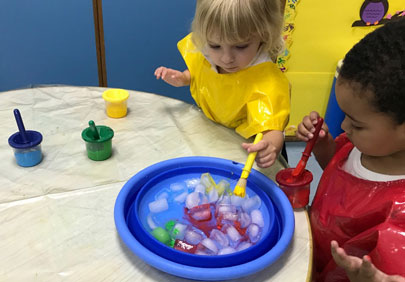
- art activities, clay or junk modelling
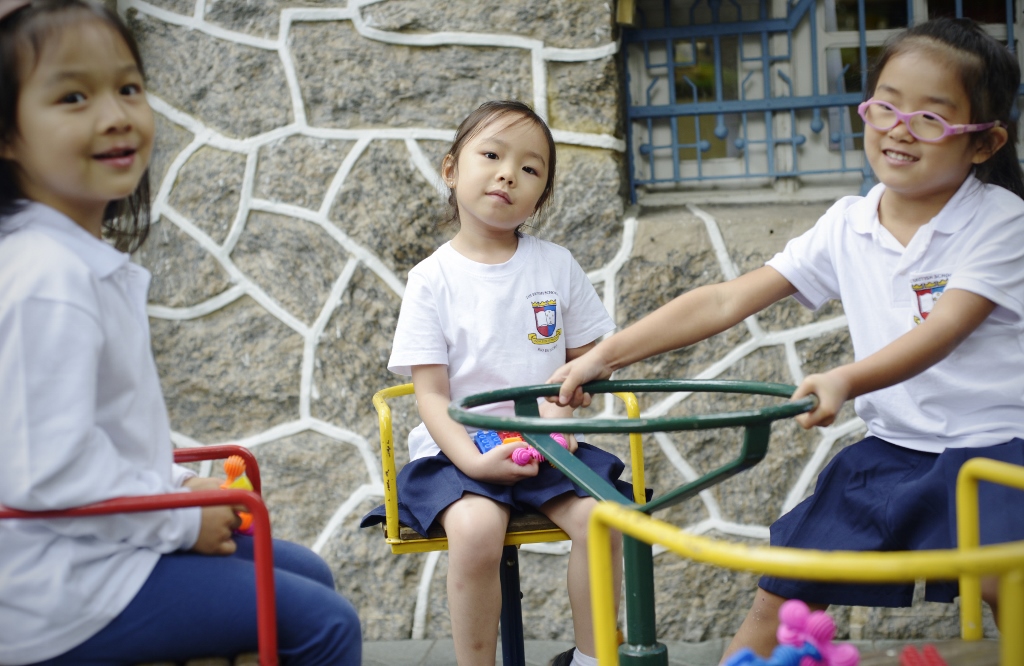
- construction toys (e.g. Lego)
- puppets / role play
- using the computer (perhaps on a rota system or book the mini lab)
- outside play (extra craze of the week or another game)
- board games
- a whole class game
Children may lose 5 minutes Golden Time by not following the “The Golden Rules”. Children who have lost time sit out and watch the activity until it is time for them to join in. Children have the chance to ‘win back’ Golden Time lost by behaving in the appropriate manner.
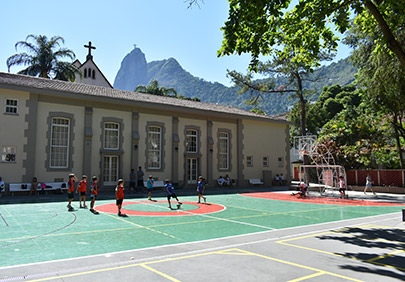
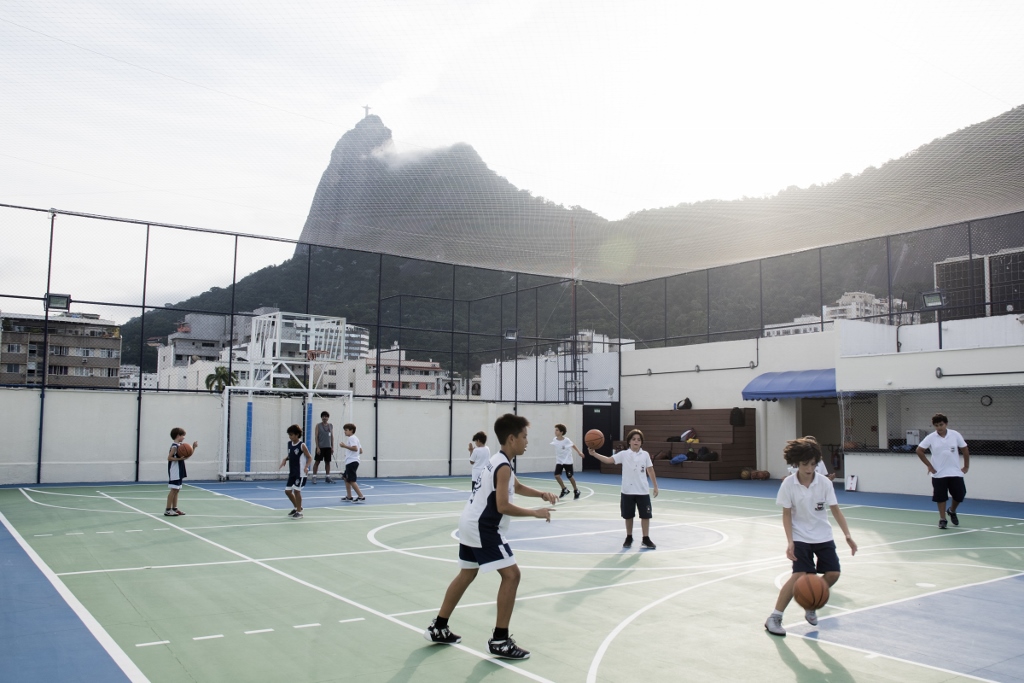
When children are busy and playing happily, there are far fewer behaviour problems on the playground. A survey conducted on the playground in April 2007 asked children how they felt about their play times. The majority of children had excellent or reasonable playtimes (results).
 
However, we were concerned to make things even better for those who, on occasions, had a poor or a bad playtime.
In order to promote an interesting and stimulating environment for cooperative play and to develop a happier playground for all the school has introduced the following initiatives:
- Positive behaviour management training has been provided for playground inspectors to help them support children in solving their problems more effectively.
- Craze of the Week – a weekly ‘craze’ is introduced, such as skipping, yo-yo, sponge balls, peteca, elastics or ‘Diabolo’. The ‘craze’ is changed after one week for something new.
- Board games – giant board games are provided at lunch time to promote cooperative play (snakes and ladders, ludo, noughts and crosses, and dominoes).
- Each week in assembly the Inspectors present a ‘Playground certificate’ to those children with exceptional behaviour on the playground or those who have shown great effort and improvement.
- Assistant teachers have regularly designated times to teach and play games on the playground as part of the lunch time routine.
- Dressing up boxes and puppet theatres are to be introduced in Term 2 2007.
- The idea of ‘playground buddies’ or ‘playground friends’ will be trialled in 2008 to help children who are alone find someone to play with.

|